Posts

Showing posts with the label melbourne

Clearances

An extract from "2032" available now in all ebook stores. Fitzroy "Fitzroy." Jack said. "What?" "Clearance." It was enough of a novelty for them to be able to attend in person. The housing policy in action. Whole blocks of 5km square blocks were being cleared out for redevelopment. Today's target was Greeves Street by George Street in Fitzroy. Some compensation, although nothing near market rates. Then the bulldozers moved in and cleared it flat. There was sporadic resistance from the owners. In this space only a small percentage, less than 10%, actually lived in the houses they owned. Mostly the owners were distant, and reluctantly accepted the compensation. In a lot of cases the owners were overseas. Hardly likely to jump on a plane and lie in front of a bulldozer. The renters in the space were overjoyed: with a 50% cut in their rent, and funded relocation to one of the new developments. They held parties, feted the government...
DeathLotto

Extract from "2032" by Andrew Jennings. Available in all ebook stores now. Cabinet meetings were of a size larger than Jack liked to deal with. Nominally it was 20 people. But with advisors hovering it stretched to something like 100, spread across two or even three rooms. Today was focused on security. The upstart government was surrounded by enemies. He tuned in as an army major stood at the lectern. “Fortunately the geography works in our favour. With a combined satellite and drone surveillance it is a simple matter to keep the northern plains free. North of the dividing range in the agricultural zones there is very little cover.” He brought up a map showing the zone. Between Albury and Shepparton, and north of Bendigo there were great open spaces. The red swathe was broad and like a circle. He thought about asking about sea-born attacks from the south, where there seemed to be no defences, but he was cautious about making an idiot of himself in such a large gathering...

Ruby's victory speech

Extract from "2032" by Andrew Jennings. Available in all ebook stores now. "Somewhere between 1 and 2" an eager face responded. Noah struggled to process that. Of course he meant somewhere between 1 and 2 million people. Where on earth do you put them all? Something like one fifth of the entire population of Melbourne. Spread throughout the city. For Ruby’s speech. A very important speech. Marking the new beginning, setting an agenda. Consolidating power. "How do we fit them?" Noah asked the obvious question. Jack turned towards him. "As far out as Brunswick. On the street. Everywhere." "Screens?" Noah asked Those without the augmented reality viewers would gather in parks. But most had the viewers that projected onto glasses. You got the speech overlayed on top of the scene you were looking at. He  hesitated to ask the most obvious question. "Security?" Ruby looked up. Glanced at Jack. “If they fly anything in pas...

Jack and the Employer

Extract from "2032" by Andrew Jennings. Available in all ebook stores now.  “Just like old times.” Noah said “Yes.” Ruby replied. Jack just smiled. In a sense it was. They would meet at the beginning of the day. Somewhere. Perhaps a cafe, or later on in a rented meeting room. Now it was the same schedule, but with quite a different view. Early in the day they could see all the way to Geelong. A few stray clouds drifted above the bay. As the day progressed, the heat would burn them off and the thin line of sand they could see would have many people on it. Below them, the MCG would hold a cricket match. Life went on. While it was possible to get 100,000 people to a sporting event you would struggle to get 10,000 to a political rally. Ruby began. “Employment practices. The sweep. We have separated them into segments. About 60% of employers are ok. A bit of dodging this and that, but they are not really a problem. Then there are about 40% that are seriously out of whack. I...

The world of "Perilous Republic"

"Perilous Republic" my novel available in all ebook stores. It is set in Melbourne Australia in the late 2020s. Some time ago I was in hospital for a few days, and I had a copy of Piketty 'Capital in the 21st century'. It is comprehensive both across cultures and through time. The book has some simple but frightening conclusions. That inequality is the result of the naked exercise of power, that throughout history it has followed a pattern of increasing to the point where it is totally irrational. Then at some point it all breaks down, either through war or revolution. My protagonists are proponents of "normal capitalism" or the perhaps unlikely "capitalism with a human face". How might they fix the housing problems? How might they fix very low wages and poor working conditions? You might think of simply seizing all the property and redistributing it, or something like that. But they don't want to do that. They want to somehow get from ...

Melbourne's housing wars

Image
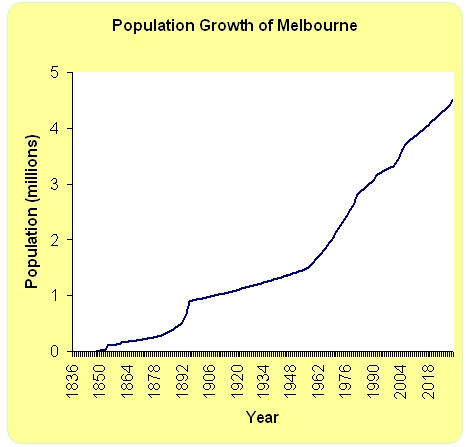
Cities are growing all over the planet. In considering Melbourne's housing problems, I was momentarily distracted by San Francisco. Seems there has been an influx of some 75 thousand people over the last decade, leading to some well publicised incidents: demonstrations at Google buses, posting of nasty signs. Serious, I thought. Then I realised that Melbourne is growing by some 50 thousand people every year. So where SF has struggled with 75 thousand, Melbourne has somehow dealt with 500 thousand. Wikimedia:  Biatch  at  en.wikipedia Impressive, I thought. Melbourne is successful. In a sense, yes. There are problems with success. It becomes expensive, for one. "The Economist" global housing prices. How can it be that it's more expensive to live in Melbourne than in London? At one level, it is the price of popularity.  How does it do it? Mostly by adding at the edges. The fastest growing areas are in the outer fringes of the city. Great...

A policeman wearing google glasses interviews you...

In the near future, you might face an interview with a policeman or woman wearing the google glasses. How might it go? First he/she might ask you your name. The glasses have access to images of you from various databases. If you give a false name he will know  straight away. Let's say you are on a train. He might ask where you are off to today. The ticket you carry has a unique number linked to your identity. He will know where you boarded the train.  He might ask where you work. Linked to the tax office database, he will have your complete work history.  What changes with the glasses is the immediacy. Especially in identifying you. Much of crime fiction is nostalgic. Typically (e.g. Rebus) the detective is an older male, quite uncomfortable with technology. He relies on younger people around him to make use of it. Even then, not a great deal of surveillance is employed. There might be some trawling through CCTV footage. Is the past somehow more human? O...